新書推薦:
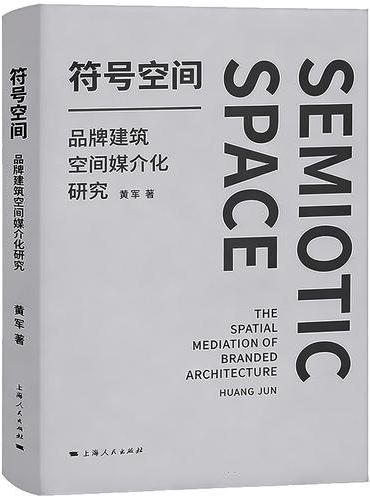
《
符号空间:品牌建筑空间媒介化研究
》
售價:NT$
638

《
宫门内外:阴云下的政变
》
售價:NT$
332

《
从阅读到输出:靠大量阅读年入7位数 每天15分钟读写闭环,启动人生复利增长系统
》
售價:NT$
356

《
世上要有天一阁
》
售價:NT$
347

《
精确科学的常识 天才数学家克利福德
》
售價:NT$
194

《
星海赞歌(第十三届北京科幻创作创意大赛“光年奖”获奖作品集)
》
售價:NT$
449

《
沪派江南·古今桥韵——高颜值的文化瑰宝
》
售價:NT$
500

《
中产阶级的孩子们:六十年代与文化领导权
》
售價:NT$
500
|
| 內容簡介: |
|
这是本套书的第二册,适合具备一定折纸基础的研究者和折纸爱好者阅读使用,本书介绍与数学相结合的设计,通过严密的数学计算,探究一些更为复杂的折叠方法,其中包括树杈理论,描述折纸设计中树形折法所应用的数学知识以及蛇腹折纸、单轴形、多边形组合和混合基本型等。
|
| 目錄:
|
|
致谢 11 树杈理论 折叠步骤分解阿拉莫马罗斯福马鹿12 蛇腹折纸 折叠步骤分解风琴手黑森林布谷鸟钟13 单轴蛇腹折纸 折叠步骤分解公驼鹿14 多边形组合 折痕图竹节虫虎甲虫天牛避日蛛水黾金龟子蝉猴HP金龟子锹形虫HP蝎子叩头虫延足蜣螂15 混合基本型 折叠步骤分解非洲象 参考文献
|
| 內容試閱:
|
|
This book was a labor of many years. It is both myearliest book and my latest book; I began writingup my ideas on how to design when I beganwhat became my first published book in the early1980s, but not until recently have I developed theframework for those ideas. Over the years, I have been influencedby many scientists and artists, both inside and outsideof origami, all of whom contributed, one way or another, to thepresent tome. It is impossible for me to identify everyone whohas contributed to my work, but some of the larger pieces comefrom the following, who I thank:Neal Elias, for his encouragement and for introducing meto the magic of box pleating and the realization that anythingwas possible in origami.Lillian Oppenheimer and Alice Gray, for introducing meto the wide, wild world of origami fanatics.Akira Yoshizawa, who started it all, then showed that therewas more to origami art than just clever designs.Dave Brill, who showed that you could have both cleverdesign and high art in the same model.John Montroll, who took origami design to an unequaledlevel and who has been a constant source of inspiration andfriendship.Michael LaFosse, who took origami art to an unequaledlevel and Richard Alexander; both have been equally greatfriends.John Smith, James Sakoda, and especially David Lister forsharing a wealth of information about the history of origami,both privately and on the origami-L mailing list; David Lister,as well for numerous private comments and corrections withrespect to origami history; and Joan Sallas, for information onearly napkin-folding and for providing one of the figures.Toshiyuki Meguro, Jun Maekawa, and Fumiaki Kawahata,who developed circle and tree methods in Japan and who allprovided crucial insights to my own work along the way.Marshall Bern, who encouraged me to write my first origamicomputer science technical paper.Barry Hayes, who, with Marshall, proved mathematicallythat origami is really, really hard (lest there be any doubt).Erik and Martin Demaine, who have been friends andcollaborators in computational origami; in particular, themathematical theory that led to Chapters 12–14 is as muchtheirs as mine.Thomas Hull, who, as the focal point of origami math, hasdone more to bring origamists and mathematicians togetherthan anyone else.Koshiro Hatori, who provided translations of several ofthe references.Dave Mitchell, for his One-Crease Elephant.Dr. Emmanuel Mooser, for his Train.Raymond W. McLain and Raymond K. McLain, for theirgenerous permission to reproduce the latter’s Train diagramsand Raymond K.’s recollections of the early days of Americanorigami.In addition to the above, numerous other insights, encouragement,ideas, concepts, and criticisms came from PeterEngel, Robert Geretschl?ger, Chris Palmer, Paulo Barreto,Helena Verrill, Alex Bateman, Brian Ewins, Jeremy Shafer,Issei Yoshino, Satoshi Kamiya, Jason Ku, Brian Chan, HideoKomatsu, Masao Okamura, and Makoto Yamaguchi. A particularthank you goes to Toshi Aoyagi who for many years actedas matchmaker and translator between me and many of myJapanese colleagues and to Koshiro Hatori, Koichi Tateishi,Marcio Noguchi, and Anne LaVin, who have all helped withtranslation and advice.I am particularly indebted to Peter Engel, Marc Kirschenbaum,and Diane Lang for proofreading the text and thediagrams and making numerous suggestions for correctionsand improvements (and Diane did so twice, for both editions).Needless to say, any errors that remain are entirely my own.There are fewer errors in this printing than in the first edition,however, and I am most grateful for the eagle eyes of Yu LinYang, Roberto Gretter, Gadi Vishne, and Tom Hull in identifyinga few elusive typos; also for fruitful discussions with Erikand Marty Demaine that allowed me to make a more precisestatement of the tree theorem in Chapter 11 and that helpedcrystallize many of the concepts of polygon packing.I would like to tha
|
|

 購物車/收銀台(0) | 在線留言板
| 付款方式
| 聯絡我們
| 運費計算
| 幫助中心 |
加入書簽
購物車/收銀台(0) | 在線留言板
| 付款方式
| 聯絡我們
| 運費計算
| 幫助中心 |
加入書簽 HOME
HOME 新書上架
新書上架