新書推薦:

《
百年星辰:寻找现代中国的大师
》
售價:NT$
500

《
情绪的真相:关于情绪的内在力量
》
售價:NT$
347

《
偷偷啃月亮
》
售價:NT$
234
《
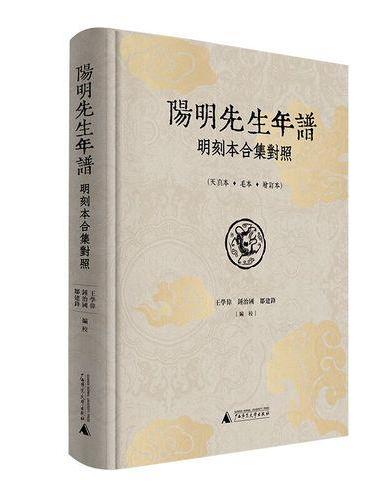
《阳明先生年谱》明刻本合集对照
》
售價:NT$
653

《
女人30+,养气血、调脾胃、防衰老(北京卫视《养生堂》《我是大医生》特邀中医养生专家第七批名老中医沈
》
售價:NT$
286

《
征服新世界:西班牙全球帝国之路,1493—1898
》
售價:NT$
449

《
不纠结了 摆脱选择焦虑的极简法则 高敏感、优柔寡断、总陷入选择内耗的 纠结星人 自救指南
》
售價:NT$
254

《
当战争来敲门(牛津二战史,耶鲁、剑桥大学教授推荐)
》
售價:NT$
449
|
| 內容簡介: |
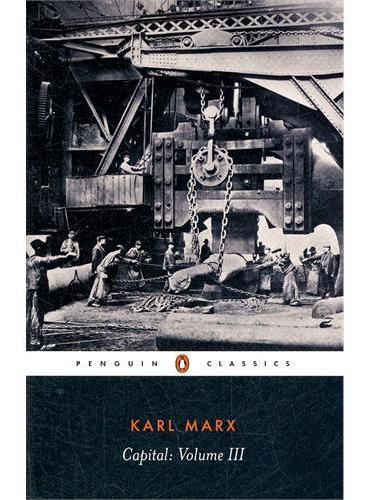
Unfinished at the time of Marx''s
death in 1883 and first published with a preface by Frederick
Engels in 1894, the third volume of "Das Kapital" strove to combine
the theories and concepts of the two previous volumes in order to
prove conclusively that capitalism is inherently unworkable as a
permanent system for society. Here, Marx asserts controversially
that - regardless of the efforts of individual capitalists, public
authorities or even generous philanthropists - any market economy
is inevitably doomed to endure a series of worsening, explosive
crises leading finally to complete collapse. But he also offers an
inspirational and compelling prediction: that the end of capitalism
will culminate, ultimately, in the birth of a far greater form of
society.
|
| 關於作者: |
Karl Marx was born in 1818 in Trier, Germany and studied in
Bonn and Berlin. Influenced by Hegel, he later reacted against
idealist philosophy and began to develop his own theory of
historical materialism. He related the state of society to its
economic foundations and mode of production, and recommended armed
revolution on the part of the proletariat. Together with Engels,
who he met in Paris, he wrote the Manifesto of the Communist Party.
He lived in England as a refugee until his death in 1888, after
participating in an unsuccessful revolution in Germany. Ernst
Mandel was a member of the Belgian TUV from 1954 to 1963 and was
chosen for the annual Alfred Marshall Lectures by Cambridge
University in 1978. He died in 1995 and the Guardian described him
as ''one of the most creative and independent-minded revolutionary
Marxist thinkers of the post-war world.'' Translated by David
Fernbach with an introduction by Ernest Mandel
|
|

 購物車/收銀台(0) | 在線留言板
| 付款方式
| 聯絡我們
| 運費計算
| 幫助中心 |
加入書簽
購物車/收銀台(0) | 在線留言板
| 付款方式
| 聯絡我們
| 運費計算
| 幫助中心 |
加入書簽 HOME
HOME 新書上架
新書上架